



Helping Men Love Their Morning Shave Again.
Good shaving isn't complicated. It rewards the right technique, quality products and a little patience. This Knowledge Centre brings together practical answers, proven methods and straightforward advice to help you enjoy a better shave every morning.
Getting Started with Wet Shaving
Everything you need to know before you start wet shaving, including products, preparation, technique and common beginner mistakes.
Wet shaving means softening facial hair with water, creating a protective lather with shaving cream or soap, and shaving with a razor while the skin remains lubricated. The method usually includes proper preparation, a shaving brush, controlled razor strokes and soothing aftercare.
MR WOOLF SAYS
Wet shaving is not about making the morning longer. It is about making the shave better.
USEFUL EXPLANATION
Unlike a quick dry shave or a pass with canned foam, wet shaving treats preparation as part of the shave. Warm water softens coarse beard hair,
while a well-hydrated lather reduces friction between blade and skin. A safety
razor is common but not compulsory; cartridge razors can also be used with good wet-shaving technique. The real difference is not nostalgia or fancy equipment.
It is softer hair, better lubrication, lighter pressure and fewer unnecessary
strokes. Beginners should learn beard-growth direction first, then shave with
the grain before attempting a closer second pass.
CONTINUE LEARNING
Explore these related guides to improve your shaving technique.
Shaving can be a healthy grooming practice when it is done gently with clean tools, adequate lubrication and suitable aftercare. It removes hair at skin level but does not detoxify the body or change hormones.
Poor technique, dirty equipment or repeated scraping can instead cause irritation.
MR WOOLF SAYS
A clean shave can be healthy grooming. It is not a medical procedure wearing a smart jacket.
A comfortable shave can help remove surface debris and leave the face feeling clean and refreshed, but the health benefit should not be exaggerated.
Shaving is primarily grooming, not medical treatment.
The skin barrier should remain the priority: soften the beard, use a lubricating cream or soap, shave with light pressure and rinse the razor frequently. Men with active infections, severe acne, eczema or persistent inflammation should avoid shaving directly over damaged skin and seek professional advice when symptoms continue. A clean-shaven face is not
automatically healthier than a beard; both can be hygienic when cared for properly.
CONTINUE LEARNING
Explore these related guides to continue learning.
Yes, many men can shave every day without harming their skin, provided they use a sharp blade, adequate lubrication, light pressure and as few passes as necessary. If daily shaving repeatedly causes burning, bumps or cuts, adjust the technique, equipment or frequency rather than simply enduring it.
MR WOOLF SAYS
Your beard grows every day. Your skin decides whether you should shave every day.
Daily shaving suits men whose workplace, preference or fast beard growth calls for a consistently clean look. The skin does not need to be scraped perfectly smooth each morning. Prepare with warm water, shave mainly with the grain and relather before any second pass.
A dull blade and repeated dry strokes do far more damage than frequency alone. Men with sensitive skin may benefit from alternating between a close shave and a lighter one-pass shave. Persistent redness, painful bumps or broken skin means the routine needs changing.
CONTINUE LEARNING
Explore these related guides to continue learning.
Daily Shave with Shaving Soap and Brush
There is no medically correct shaving schedule for every man. Shave as often as your beard growth, skin tolerance, workplace and preferred appearance require. That may mean daily, every two or three days, weekly, or only trimming. Comfort and skin condition matter more than copying someone else’s routine.
MR WOOLF SAYS
The correct shaving schedule is the one your face can live with comfortably.
Fast-growing straight hair may remain comfortable with frequent shaving, while coarse or curly hair may be more prone to ingrown hairs after very close shaves. Men with irritation should first improve preparation, blade sharpness and stroke direction before assuming they must shave less often.
If you shave occasionally, longer stubble may need trimming before using a razor. Keep a simple record for two weeks: frequency, blade used and post-shave comfort. That will reveal your practical schedule better than an arbitrary rule.
CONTINUE LEARNING
Explore these related guides to continue learning.
Daily Shave with Shaving Soap and Brush
Yes. Shaving every three days is perfectly reasonable if it suits your beard growth, skin and preferred appearance. There is no requirement to shave daily. Three-day stubble may need slightly more beard softening and
careful first-pass strokes than shorter daily growth.
MR WOOLF SAYS
Three days is a perfectly respectable interval. Your beard has not filed a complaint.
Before shaving three-day growth, wash with warm water or shave after a shower and allow the lather to sit briefly. If the beard is particularly dense, trim very long or uneven hairs first.
Follow the direction of growth and avoid forcing the razor through clogged lather; rinse it often. Some men with curly facial hair actually experience fewer problems when they shave every two or three days, while others develop more ingrown hairs as the hair curves. Your skin’s response should decide the schedule.
CONTINUE LEARNING
Explore these related guides to continue learning.
Daily Shave with Shaving Soap and Brush
A good shave can make you feel better because it creates a visible sense of order, cleanliness and readiness. Warm water, fragrance, deliberate movements and a refreshed face can turn an ordinary grooming task into a calming morning ritual. The effect is psychological and sensory, not a hormonal surge.
MR WOOLF SAYS
A good shave cannot solve the day. It can certainly improve the way you begin it.
Rituals help mark transitions. Shaving can signal that sleep is over and the working day has begun, much like exercise, bathing or getting dressed well. A smoother face may also improve confidence because the result is immediate and visible.
Fragrance and cool aftercare add sensory reinforcement. None of this requires claiming that shaving cures stress. The benefit comes from attention, competence and a small task completed properly. If the shave hurts, however, the ritual becomes punishment; comfort is what allows the psychological benefit to appear.
CONTINUE LEARNING
Explore these related guides to continue learning.
No. Shaving does not increase testosterone, lower testosterone or otherwise change male hormone levels. A razor cuts hair above the skin’s surface; it does not affect the testes, bloodstream or hormone-producing systems. Beard growth can reflect androgen activity, but removing the hair cannot reverse that biological relationship.
MR WOOLF SAYS
A razor cuts hair. It does not negotiate with your hormones.
The confusion comes from puberty, when testosterone increases and facial hair often becomes thicker at roughly the same time a young man starts shaving. The shaving did not create the hormonal change.
Similarly, freshly cut hair has a blunt edge and may feel rougher as it grows, which can create the illusion of stronger growth. Men concerned about low testosterone, sudden changes in beard growth, sexual symptoms or unexplained fatigue should speak to a qualified medical professional rather than judging hormone levels by shaving frequency.
CONTINUE LEARNING
Explore these related guides to continue learning.
No. Shaving does not change the thickness, colour or growth rate of facial hair. It cuts the hair at skin level and leaves a blunt tip, so new stubble can temporarily feel coarser and look darker. The follicle beneath the skin remains unchanged.
MR WOOLF SAYS
The stubble feels tougher because the tip is blunt. The follicle remains entirely unimpressed.
Hair growth is governed mainly by genetics, age, hormones and follicle biology. A razor never reaches the follicle, so it cannot make the follicle produce a thicker strand.
The myth survives because unshaven hair naturally tapers at its tip, whereas shaved hair emerges with a flat edge. That flat edge feels rough against the fingers and may appear more prominent until it lengthens. Shaving more often can maintain the appearance of dense stubble, but it does not create new follicles or accelerate growth.
CONTINUE LEARNING
Explore these related guides to continue learning.
A beginner should soften the beard with warm water, apply a properly hydrated shaving cream or soap, shave with the grain using light pressure, rinse, and finish with a soothing after-shave product. Start with one careful pass and learn your beard pattern before chasing an ultra-close shave.
MR WOOLF SAYS
First learn to shave comfortably. Closeness can apply for promotion later.
Use a forgiving closed-comb safety razor or a familiar cartridge while learning. Hold a safety razor at roughly a 30-degree working angle and let its weight do the cutting. Short strokes are easier to control than long sweeps.
Never shave repeatedly over an area after the lather has disappeared. For the first few weeks, measure success by comfort and consistency, not by achieving perfectly smooth skin against every direction.
Once technique is stable, add a second cross-grain pass only where needed.
CONTINUE LEARNING
Explore these related guides to continue learning.
SHAVING PROBLEMS
Solve Common Shaving Problems with Confidence
Find practical solutions for razor burn, razor
bumps, ingrown hairs, cuts, nicks and post-shave irritation so every shave
becomes more comfortable.
Prevent razor burn by softening the beard, using a cushioning lather, shaving with a sharp blade and light pressure, following hair growth, and limiting repeated strokes. Relather before every additional pass. Finish with a cool rinse and a soothing, non-irritating after-shave product.
MR WOOLF SAYS
Most razor burn begins with too much haste, too much pressure, or both arriving together.
Razor burn is usually friction and skin-barrier irritation, not proof that your skin is inherently defective. Common causes include dull blades, pressing hard, shaving dry skin, using too little lather and repeatedly scraping the same area.
Map your beard because neck hair often grows sideways or upward. If burning occurs, pause close shaving until the skin settles and avoid alcohol-heavy or strongly fragranced products on damaged skin. Persistent pain,
pus-filled spots or spreading inflammation may indicate another condition and deserves medical attention.
CONTINUE LEARNING
Explore these related guides to continue learning.
How to Shave Your Face: Five Key Points
Reduce razor bumps by shaving in the direction of hair growth, avoiding skin stretching, using fewer strokes and leaving the hair slightly above skin level rather than chasing an excessively close shave. A sharp single- or double-edge blade and good lubrication can help some men.
MR WOOLF SAYS
Do not chase a closer shave if your skin keeps sending written objections.
Razor bumps occur when cut hairs curve back into the skin, especially in coarse or curly beards. Do not pick, squeeze or dig out bumps with a needle; that increases inflammation, infection and dark marks.
Warm water and moisturising lather soften the hair before shaving. If bumps remain frequent, try a less aggressive razor, a milder blade, fewer passes or an electric trimmer that leaves short stubble. Severe, painful or recurring pseudofolliculitis should be assessed by a dermatologist.
CONTINUE LEARNING
Explore these related guides to continue learning.
How to Use a Safety Razor: Beginner’s Guide
Ingrown facial hair develops when a cut hair grows sideways or curls back into the skin instead of emerging normally. Close shaving, curly hair, stretching the skin, shaving against the grain, clogged follicles and repeated irritation can all increase the risk.
MR WOOLF SAYS
Hair sometimes takes the wrong turn. Very close shaving can make the detour easier.
Men with coarse, tightly curled beard hair are particularly susceptible because the sharpened hair tip can re-enter nearby skin. Multi-blade systems may lift and cut hair below skin level, which can worsen the problem for some users.
Prevention focuses on reducing closeness and irritation:
soften the hair, use slippery lather, shave with growth, avoid pressing, and use fewer passes.
Gentle exfoliation may help release trapped hairs, but aggressive scrubbing can make inflamed skin worse. Seek care for painful, infected or scar-forming bumps.
CONTINUE LEARNING
Explore these related guides to continue learning.
How to Use a Safety Razor: Beginner’s Guide
The neck commonly burns because its hair grows in several directions and the skin is easily overworked. Shaving upward by habit, pressing harder on curves, using repeated strokes or shaving without enough lather can create concentrated friction and irritation.
MR WOOLF SAYS
The neck is not difficult. It merely refuses to grow hair in one convenient direction.
Before the next shave, let the neck stubble grow for a day or two and examine its direction in good light. The lower neck may grow sideways or upward rather than downward. Use short strokes that follow each zone’s grain and avoid stretching the skin tightly.
Reapply lather before touching an area again. A milder razor or blade can help, but technique usually matters more than buying another tool. If the burning is accompanied by persistent bumps, pus or scaling, consider medical advice rather than assuming it is ordinary razor burn.
CONTINUE LEARNING
Explore these related guides to continue learning.
How to Shave Your Face: Five Key Points
Men with sensitive skin should minimise friction: soften the beard well, use a mild moisturising lather, choose a sharp but forgiving blade, shave with the grain, avoid pressure and limit passes. Finish with cool water and a gentle balm rather than an aggressive alcohol splash.
MR WOOLF SAYS
Sensitive skin appreciates consistency far more than a crowded bathroom shelf.
Sensitive skin often reacts to a combination of technique and ingredients. Introduce one new product at a time so you can identify triggers. Fragrance-free or lower-fragrance products may be preferable during
flare-ups, and a small patch test is sensible for unfamiliar formulations.
Never shave directly over broken, severely inflamed or infected skin. A pre-shave oil can improve glide for some men, but it cannot compensate for a dull blade or heavy hand. Consistent simple technique usually beats a bathroom shelf full of miracle bottles.
CONTINUE LEARNING
Explore these related guides to continue learning.
Use a sharp blade, light pressure, short controlled strokes and adequate lather to reduce cuts. Keep the razor angle stable, avoid sideways movement and slow down around the lips, chin and jaw. Do not repeatedly shave over unlathered skin.
MR WOOLF SAYS
The blade is already sharp. It does not need help from extra pressure.
Most small nicks are technical rather than random. A safety razor cuts efficiently when the cap and guard remain in controlled contact with the skin; steep or changing angles expose more blade. Cartridge heads can also cut when dragged sideways or forced through clogged stubble.
Stretch only enough to create a flat surface, not so tightly that hair is pulled below skin level. For a small nick, rinse, apply gentle pressure with clean tissue and use an alum block or styptic product if appropriate. Seek care for deep or persistent bleeding.
CONTINUE LEARNING
Explore these related guides to continue learning.
Shaving can leave skin dry when the blade removes protective surface oils and repeatedly disrupts the skin barrier. Hot water, harsh cleansers, poor lubrication, too many passes and alcohol-heavy after-shaves can
intensify tightness, flaking and discomfort.
MR WOOLF SAYS
If the face feels tighter than the lid on a new jar, the routine needs more moisture.
Use warm rather than very hot water, apply a well-hydrated lather and stop shaving once the required hair is removed. Rinse thoroughly but
gently, pat dry instead of rubbing, and apply a moisturising after-shave balm
while the skin is slightly damp.
If your face is naturally dry, avoid strong degreasing face washes immediately before shaving. Persistent scaling, cracking or itching may reflect eczema, dermatitis or another condition rather than simple post-shave dryness.
CONTINUE LEARNING
Explore these related guides to continue learning.
You can shave with mild acne, but avoid cutting directly over inflamed pimples, cysts or broken skin. Use clean equipment, gentle non-comedogenic products, light pressure and as few passes as possible.
Severe or painful acne should be managed with medical guidance.
MR WOOLF SAYS
Shave around inflamed spots, not through them. Bravery is unnecessary here.
Wash gently before shaving and do not scrub active lesions. A razor can rupture spots, spread irritation and make inflammation look worse. Shave with the grain and rinse the blade frequently.
An electric trimmer that leaves short stubble may be more comfortable during a flare. Some acne medicines increase dryness or skin sensitivity, so the correct shaving routine can change during treatment. If shaving repeatedly causes pus-filled follicle spots, the problem may be folliculitis rather than acne and should be assessed professionally.
CONTINUE LEARNING
Explore these related guides to continue learning.
Soften coarse or curly hair thoroughly, use a slick moisturising lather, shave in the direction of growth and avoid cutting below skin level. Use short strokes, minimal pressure and fewer passes. Comfort is more important than an aggressively close result.
MR WOOLF SAYS
Coarse hair responds better to patience than force. Most things do.
Coarse hair requires more hydration because dry beard hair resists the blade and encourages pressure. Shave after a shower or hold a warm wet towel against the beard, then let the lather sit for a minute.
Map the growth pattern carefully because curly beards often change direction across the neck. A single-blade safety razor or guarded trimmer may reduce repeated cutting and ingrown hairs for some men. Do not stretch the skin tightly, and avoid an against-grain pass until you know your skin tolerates it.
CONTINUE LEARNING
Explore these related guides to continue learning.
How to Use Pre-Shave Oil Correctly
Razors and Blades
Choose the Right Razor and Blade
Understand the different types of razors and blades, how they work and how to choose the right combination for your beard, skin and shaving routine.
The best daily razor is one that removes your beard comfortably with minimal irritation. For many men, a mild closed-comb safety razor with a suitable blade works well; others prefer a cartridge or electric shaver. Technique and skin response matter more than the number of blades.
MR WOOLF SAYS
The best daily razor is the one you can use well before the first cup of tea.
Daily shavers should prioritise predictability, easy rinsing and low skin trauma. A closed-comb safety razor offers controlled blade exposure and allows inexpensive blade changes. Cartridge razors are convenient
but may irritate men prone to bumps because several blades pass over the same area.
Electric shavers are fast and can leave slightly less-close stubble, which some sensitive skins prefer. Test one system consistently for several shaves before changing variables. The best razor is the one you can use correctly every morning, not the most aggressive object in the cabinet.
CONTINUE LEARNING
Explore these related guides to continue learning.
Daily Shave with Shaving Soap and Brush
A sharp razor used with correct preparation and multiple well-lubricated passes gives the closest shave. Safety razors, cartridges and foil electrics can all shave closely, but greater closeness may increase irritation. The closest possible shave is not automatically the best shave for your skin.
MR WOOLF SAYS
The closest shave is not always the finest shave. Comfort still gets the final vote.
Safety razors give the user direct control over angle and passes, while multi-blade cartridges can cut hair progressively close with one stroke. An against-grain pass may feel smoothest, but it raises the risk of bumps and burning in susceptible men.
Start with the grain, then use a cross-grain pass only where needed. If your skin remains comfortable, experiment cautiously rather than treating glass-smooth skin as a compulsory finish. A shave that looks clean and feels calm six hours later is superior to one that feels perfect for ten minutes and burns all day.
CONTINUE LEARNING
Explore these related guides to continue learning.
Five blades are not automatically better than three. More blades may remove hair efficiently and feel smooth for some users, but they also create more blade-to-skin contact in each stroke. Men prone to razor bumps or irritation may do better with fewer blades and better technique.
MR WOOLF SAYS
More blades make a larger number on the packet. Your skin may remain unconvinced.
A multi-blade cartridge lifts and cuts hair through a sequence of blades. That can deliver convenience, but it may also cut very close or below skin level, especially when pressure is applied. Fewer blades do not guarantee comfort either; a dull three-blade cartridge can still scrape
badly.
Compare systems using the same preparation and shaving cream, and judge redness, bumps and comfort over several days. Marketing loves blade counts because numbers look scientific. Your face is less impressed.
CONTINUE LEARNING
Explore these related guides to continue learning.
How to Use a Safety Razor: Beginner’s Guide
A safety razor is often better for control, lower blade cost, reduced plastic waste and fewer blade passes, while a cartridge razor is usually quicker and easier to learn. Neither is universally superior. The better choice depends on technique, time, skin and beard type.
MR WOOLF SAYS
The better razor is the one that suits your face, your hand and your morning.
A safety razor uses a replaceable double-edge blade and requires the user to control angle and pressure. That learning curve is real, but many men appreciate the close, deliberate shave and inexpensive blades.
A cartridge pivots automatically and is convenient for travel or rushed mornings, but replacement heads are costly and multiple blades can aggravate bumps in some users. Men moving to a safety razor should begin with a mild closed comb and shave with the grain. Do not buy an aggressive razor merely because the internet calls it 'advanced.'
CONTINUE LEARNING
Explore these related guides to continue learning.
Electric razors are better for speed, convenience and shaving without traditional lather; manual razors are usually better for ritual, flexibility and a very close finish. Electric shavers may suit men who tolerate a slightly less-close result better than repeated blade contact.
MR WOOLF SAYS
An electric shaver is efficient. A wet shave has rather more ceremony.
Foil and rotary shavers work differently and can require an adjustment period. They should still be used on clean skin and maintained according to the manufacturer’s instructions. Some users benefit from a pre-electric shave preparation, while others prefer dry shaving.
An electric shaver can reduce cuts but may still cause friction, heat or ingrown hairs. For travel or daily office grooming it can be excellent. For men who enjoy brush-built lather and precise beard mapping, it may feel more like an appliance than a shave.
CONTINUE LEARNING
Explore these related guides to continue learning.
Yes. A mild closed-comb safety razor is suitable for beginners who are willing to learn angle, pressure and beard direction. It is not inherently dangerous, but it is less forgiving of sideways movement and heavy pressure than a pivoting cartridge.
MR WOOLF SAYS
Yes. Start mild, move slowly and leave heroics to the cinema.
Begin with a fresh blade, abundant lather and short strokes. Rest the razor cap against the face and gradually tilt until the blade cuts comfortably, usually around a 30-degree working angle. Let the razor’s weight provide pressure.
For the first few shaves, complete one with-grain pass and accept a socially clean rather than perfectly smooth result. Practise when you are not rushing. Most beginner cuts come from habitually pressing as though using a cartridge or moving the razor sideways.
CONTINUE LEARNING
Explore these related guides to continue learning.
Replace the blade when it begins to tug, require extra pressure or leave more irritation. Many double-edge and cartridge blades last roughly five to seven comfortable shaves, but beard thickness, blade quality, technique and storage can shorten or extend that range.
MR WOOLF SAYS
Sharp blades are cheaper than irritated skin.
Do not turn blade longevity into an endurance contest worth thirteen rupees. Coarse beard hair and large shaving areas dull blades faster. Rinse the razor thoroughly after use and store it where it can dry rather than leaving it wet in the shower.
A blade can look clean while its edge has already degraded. If one side feels rough or the shave suddenly becomes less comfortable, change it. Men with active skin infections should be especially careful about cleanliness and should not share razors.
CONTINUE LEARNING
Explore these related guides to continue learning.
Daily Shave with Shaving Soap and Brush
Most safety razors work best at an approximate 30-degree blade-to-skin angle, but the exact angle varies with the razor head. Start with the cap touching the skin, tilt slowly until the blade begins cutting, and maintain that comfortable position with light pressure.
MR WOOLF SAYS
Thirty degrees is a useful guide, not an examination question.
Do not obsess over measuring exactly 30 degrees in the mirror. Listen and feel: clean cutting produces a gentle sound without scraping or tugging.
A very steep handle angle may expose the blade too aggressively, while an angle that is too shallow may fail to cut. Facial curves require small adjustments, so use short strokes rather than locking the wrist through the entire cheek or jaw. If you repeatedly nick yourself, reduce
pressure first and then reassess angle.
CONTINUE LEARNING
A safety razor can reduce razor bumps for some men because one blade cuts hair without the repeated lifting and cutting action of multi-blade cartridges. The benefit depends on shaving with the grain, avoiding pressure and not stretching the skin or chasing an excessively close shave.
MR WOOLF SAYS
A better razor can help. Better technique still has to turn up for work.
Simply buying a safety razor will not fix bumps if the same poor habits continue. Use a mild closed comb, sharp blade and cushioning lather.
Map the beard, especially on the neck, and use fewer passes. Men with tightly curled hair may prefer leaving a tiny amount of stubble rather than shaving below skin level. If bumps are severe, painful or causing dark marks and scarring, consult a dermatologist; equipment is only one part of managing pseudofolliculitis.
CONTINUE LEARNING
Explore these related guides to continue learning.
How to Use a Safety Razor: Beginner’s Guide
Choose a closed-comb safety razor for daily shaving, sensitive skin or learning technique. Choose an open-comb razor for heavier or longer beard growth when you need better lather and stubble flow. Open combs are not automatically more dangerous, but they usually demand greater control.
MR WOOLF SAYS
Closed comb is the polite introduction. Open comb is the firmer handshake.
A closed-comb guard presents a continuous safety bar in front of the blade, making the shave feel smoother and more forgiving. An open comb uses separated teeth, allowing thicker growth and lather to pass through more easily.
Razor geometry matters as much as the comb label, so one open comb may be milder than another brand’s closed comb. For most beginners and frequent shavers, start closed. Consider an open comb if you shave every several days, have dense growth and already maintain a light, stable hand.
CONTINUE LEARNING
Explore these related guides to continue learning.
Shaving Cream, Soap and Brushes
Understanding Shaving Creams, Soaps and Brushes
Learn how shaving creams, soaps and brushes improve
lubrication, comfort and lather, and how to get the best performance from each.
Neither is universally better. Shaving cream loads quickly and is easier for beginners, while shaving soap usually offers a more traditional ritual, excellent economy and greater control over lather-building. Both can provide cushioning and glide when properly hydrated.
MR WOOLF SAYS
Cream is quicker. Soap is slower. Both work when the lather does.
Choose based on time, technique and enjoyment. Cream can be placed directly in a bowl or on a damp brush and becomes usable quickly, making it convenient for weekdays. Soap requires loading from the puck and gradually
adding water, but a good soap can last for months.
Poorly hydrated soap becomes pasty and draggy; over-watered cream becomes thin and unstable. The correct product is the one you can turn into slick, protective lather consistently. Skin type and formulation matter more than whether the label says cream or soap.
CONTINUE LEARNING
Explore these related guides to continue learning.
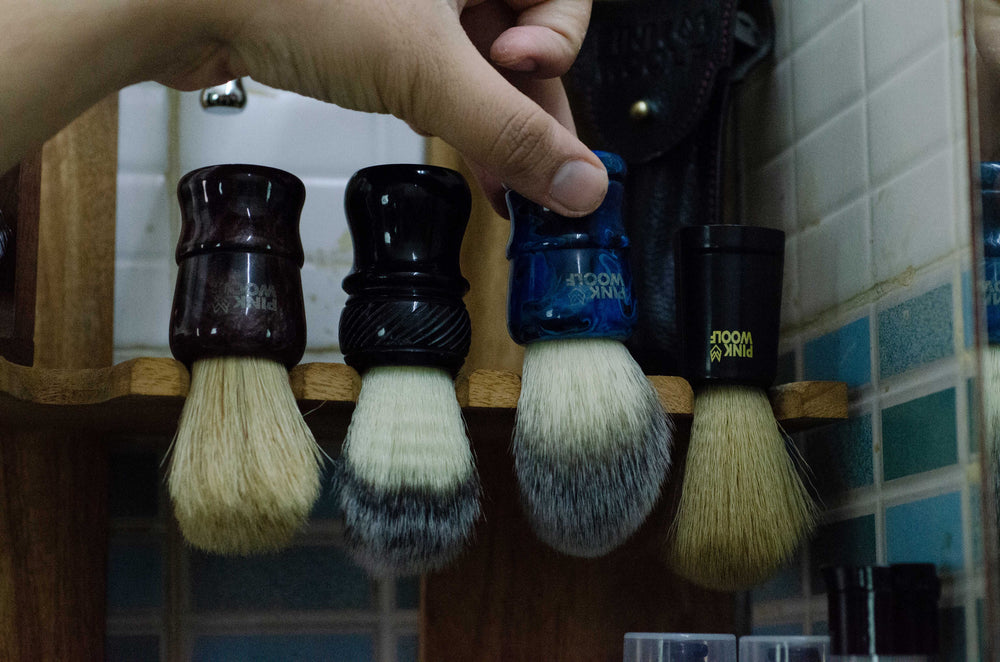
A shaving brush mixes product, water and air into a protective lather while lifting facial hair and distributing lubrication evenly. It also helps massage lather into difficult areas such as the jaw and neck. Fingers can spread cream, but a brush builds and manages lather more
effectively.
MR WOOLF SAYS
A shaving brush does not make you old-fashioned. It makes the lather better prepared.
Brushes are not decorative Victorian props. They help control water, which is crucial to slickness. Circular or painting strokes coat the beard from several directions and can soften coarse hair more evenly.
Synthetic brushes are easy to maintain and dry quickly; boar brushes provide more backbone and develop character with use. Use gentle pressure so the knot splays without crushing against the face. A brush should improve preparation, not exfoliate the skin into submission.
CONTINUE LEARNING
Explore these related guides to continue learning.
Yes, but most hard shaving soaps perform best with a brush. You can rub a soft soap or soap stick directly onto wet stubble and work it with your fingers, but generating a stable, hydrated lather is usually easier and more consistent with a shaving brush.
MR WOOLF SAYS
You can. The soap will simply wonder why you made its job more difficult.
Hard pucks need water and mechanical loading to release enough product. A damp brush can gather soap efficiently and then build lather in a bowl or directly on the face.
Without a brush, users often apply too little product or create a thin film that lacks cushioning. If you must shave without one, soften the soap surface with a few drops of warm water, use wet fingertips and work patiently. Do not mistake visible whiteness for proper protection; the lather should feel slick between the fingers.
CONTINUE LEARNING
Explore these related guides to continue learning.
Load enough cream or soap onto a damp brush, then add water gradually while whipping in a bowl or on the face. Stop when the lather is glossy, dense and forms soft peaks while remaining slippery. A dry, bubbly or disappearing lather needs adjustment.
MR WOOLF SAYS
Add water gradually. Lather, like good conversation, suffers when flooded.
Shake excess water from the soaked brush, load soap for 20 to 40 seconds or use an almond-sized amount of cream, and begin mixing. Add water a few drops at a time rather than flooding the bowl. The lather should expand and become smooth, with no large bubbles.
Test slickness by rubbing a little between thumb and finger; it should glide rather than feel sticky. Different brushes and water hardness require small adjustments. Practice for three shaves before declaring the product defective.
CONTINUE LEARNING
Explore these related guides to continue learning.
An almond-sized amount of concentrated shaving cream is usually enough for a full two- or three-pass face shave. Very dense beards, head shaving or a large brush may need slightly more. The correct amount is whatever produces enough hydrated lather to relather every pass.
MR WOOLF SAYS
Begin with an almond-sized amount. This is shaving cream, not wall plaster.
Using too little cream creates thin lather and encourages shaving over partly bare skin. Using far too much wastes product but is usually less harmful than using too little water.
Start modestly, build the lather and add a small amount only if the brush cannot hold enough for the required passes. Concentrated traditional cream is different from canned foam, so do not compare volume by appearance. The goal is a stable layer with visible coverage and strong underlying slickness.
CONTINUE LEARNING
Explore these related guides to continue learning.
Synthetic brushes are softer from the first use, dry quickly and require little maintenance. Boar brushes usually offer firmer backbone, improve after breaking in and can lift dense stubble effectively. Neither is categorically better; the choice depends on feel, travel, lather style and
patience.
MR WOOLF SAYS
Synthetic is ready immediately. Boar improves with acquaintance.
A quality synthetic knot is reliable for sensitive skin and frequent use because it retains less water and dries quickly. Boar bristles split at the tips over time, becoming softer while retaining firmness near the base. New boar brushes may have an animal scent and need several uses to break in.
Do not soak synthetic brushes for long; simply wet them. Boar brushes benefit from a brief soak before use. Whichever you choose, avoid excessive pressure and allow it to dry in open air.
CONTINUE LEARNING
Explore these related guides to continue learning.
A 50-gram shaving soap refill can commonly last several months, depending on loading time, brush size, beard area, frequency and number
of passes. A user who shaves daily and loads heavily will finish it faster than
someone shaving twice a week.
MR WOOLF SAYS
Long enough to reward proper use, but not long enough to become an heirloom.
Soap longevity is one of wet shaving’s practical advantages, but exact 'number of shaves' claims are unreliable. Water left standing in the container can soften and waste the puck, while under-loading may save soap at the cost of a poor shave.
Load enough for comfortable lather, then leave the soap uncovered until the surface dries before closing the lid. Track the opening date on the base if you want a real personal benchmark. Your own usage data will be more accurate than heroic internet claims of a puck lasting until retirement.
CONTINUE LEARNING
Explore these related guides to continue learning.
Rinse the brush thoroughly in clean water until no soap remains, gently squeeze from the base toward the tips, shake out excess water and leave it to dry in an open, ventilated area. Do not twist, wring or store a damp brush in a closed cupboard.
MR WOOLF SAYS
Rinse it well and let it breathe. A damp cupboard is not a retirement plan.
Soap residue trapped near the knot can make bristles stiff and shorten brush life. Rinse from several angles and lightly brush the tips over a clean towel without scrubbing.
Hanging a brush is convenient but not essential; good airflow matters more than direction. Keep the handle away from standing water and never use boiling water, which can damage adhesives and fibres. An occasional mild shampoo wash can remove buildup, but harsh detergents and frequent deep cleaning are unnecessary.
CONTINUE LEARNING
Explore these related guides to continue learning.
Yes. Shaving cream can expire or deteriorate after opening. Follow the printed expiry or period-after-opening guidance, and discard it if the smell, colour, texture or performance changes significantly, or if mould, separation or contamination appears.
MR WOOLF SAYS
When the cream smells doubtful, your face should not conduct the investigation.
Keep the container tightly closed, use clean dry fingers or a scoop, and avoid allowing water to sit inside the jar. Heat, direct sunlight and repeated contamination shorten product life.
Minor settling may sometimes be corrected by mixing, but a rancid smell, unusual discolouration or skin reaction is not worth investigating with your face. Natural oils and fragrances can change over time even when the product still looks acceptable. When in doubt, replace it; shaving cream is cheaper than a dermatologist.
CONTINUE LEARNING
Explore these related guides to continue learning.
Canned foam is pre-aerated for speed, while traditional shaving cream is mixed with water to create customised lather. Foam is convenient, but many formulas produce a lighter protective layer and encourage users to start shaving before the beard has softened properly.
MR WOOLF SAYS
Canned foam arrives ready. Traditional cream expects a little participation.
Traditional cream lets you control hydration and work the product into the beard with a brush. That process improves coverage and can create more residual slickness between passes.
Canned foam is not automatically harmful; a well-formulated foam used with good technique can work. The problem is often the rushed routine
surrounding it: quick application, insufficient water, excessive pressure and repeated strokes. Judge the product by glide, post-shave comfort and ingredient tolerance rather than by the dramatic size of the white cloud.
CONTINUE LEARNING
Explore these related guides to continue learning.
Tools, Maintenance and Product Selection
MASTER SHAVING PREPARATION, TECHNIQUE AND AFTERCARE
Master the small techniques that make the biggest difference before, during and after shaving for consistently better results.
Rinse the razor thoroughly after every shave, removing hair and lather from both sides of the head. Periodically disassemble it, wash with warm water and mild soap, use a soft toothbrush around threads and channels, then dry completely before reassembly.
MR WOOLF SAYS
A razor should look used, not neglected.
Soap scum and mineral deposits can affect blade alignment and appearance. Avoid abrasive powders, steel wool and harsh chemicals that may damage plating. Remove and discard the blade safely before deep cleaning.
For stubborn hard-water residue, use a manufacturer-safe diluted vinegar soak only if the razor’s finish permits it; some coatings should not be soaked. Lightly clean threads and avoid overtightening the handle. A clean razor is maintained equipment, not a sterile surgical
instrument, but never share it.
CONTINUE LEARNING
Explore these related guides to continue learning.
Let the soap surface dry after use, then close the container and store it in a cool, dry place away from direct sunlight and excessive heat. Do not leave standing water on the puck or seal it immediately while saturated.
MR WOOLF SAYS
Let the soap dry before closing the lid. Even good soap dislikes being sealed in a puddle.
After loading, pour away pooled water and leave the lid open until the surface is no longer wet. This reduces softening, scent deterioration and contamination.
Avoid repeatedly touching the soap with dirty fingers. Travel containers should be dried before being packed for long periods. Small cracks or surface changes can occur as natural soaps dry and are not always a problem, but mould, rancid odour or unusual discolouration means the product should be discarded.
CONTINUE LEARNING
Explore these related guides to continue learning.
A quality shaving brush can last several years and often much longer when rinsed thoroughly, dried with good airflow and used without excessive pressure. Lifespan depends on fibre, construction, adhesive, water quality, rotation and handling.
MR WOOLF SAYS
Treat it well and it may outlast several ambitious grooming resolutions.
Occasional shedding of one or two hairs can be normal, particularly when a brush is new. Persistent clumps, a loose knot or cracked handle indicate damage.
Do not mash the brush into the bowl or face, use boiling water, twist the knot dry or store it damp in a closed case. Travellers should allow it to dry before packing. Owning two brushes and rotating them can extend drying time, but it is not essential for normal home use.
CONTINUE LEARNING
Explore these related guides to continue learning.
Choose products by how your skin behaves after cleansing and shaving. Dry or sensitive skin usually benefits from richer, gentler lather and balm; oily skin may prefer lighter aftercare; acne-prone skin needs clean tools and non-comedogenic formulations. Technique remains as important as ingredients.
MR WOOLF SAYS
Choose for the skin you have, not the skin the advertisement promises.
Do not diagnose your entire skin type from one bad shave. Track tightness, oiliness, bumps and reactions across several days. Introduce products individually so you know what caused improvement or irritation.
Fragrance preference is separate from skin tolerance: a scent you love can still irritate damaged skin. Men with eczema, severe acne, unexplained rash or recurrent infection should seek dermatological advice. Product recommendations are useful, but they are not a substitute for diagnosis.
CONTINUE LEARNING
Explore these related guides to continue learning.
How to Shave Your Face: Five Key Points
Choose Oudh & Sandalwood for warm, woody depth; Oceanic Blue for fresh everyday energy; Seabuckthorn & Aloe Vera for a calm, gentle character; and Neroli & Mandarin for bright citrus freshness.
Fragrance preference is personal, so begin with the mood you want from your morning.
MR WOOLF SAYS
Choose the fragrance that suits the morning you want to have.
Think beyond 'best fragrance.' Oudh & Sandalwood suits traditional, evening or sophisticated grooming. Oceanic Blue feels clean and invigorating, especially in warm weather. Seabuckthorn & Aloe Vera is positioned around comfort and a softer sensory profile.
Neroli & Mandarin offers a lively, modern citrus-floral direction. Fragrance does not determine shaving performance, and sensitive users should prioritise skin response over scent strength. Where available, keep the routine within one fragrance family for a coherent experience or mix deliberately.
CONTINUE LEARNING
Explore these related guides to continue learning.
Perfect Shave with Shaving Soap and Pre-Shave Oil
Use warm water, a mild pre-shave preparation if helpful, rich moisturising lather, a sharp blade in a mild razor, one with-grain pass and gentle after-shave balm. Avoid pressure, repeated cleanup strokes, strong alcohol and shaving over active irritation.
MR WOOLF SAYS
Sensitive skin prefers a dependable routine to a weekly equipment revolution.
Sensitive skin routines should be boringly consistent. Change only one variable at a time and give the skin several shaves to respond.
A closed-comb safety razor or comfortable cartridge can both work; the decisive factor is whether you control pressure and passes. Consider shaving every second day during irritation, but do not assume frequency alone is the cause. If the skin remains inflamed even with careful technique, stop experimenting and consult a dermatologist.
CONTINUE LEARNING
Explore these related guides to continue learning.
A beginner needs a comfortable razor, fresh blades, shaving cream or soap, a shaving brush if using traditional lather, and a suitable after-shave product. A bowl, stand, alum block and pre-shave oil are useful options but not compulsory on day one.
MR WOOLF SAYS
A beginner needs a working kit, not a display cabinet.
Buy a simple working kit rather than collecting equipment before learning technique. A mild closed-comb razor, one reliable blade type, concentrated cream and synthetic brush make a forgiving start. Use the same
combination for several weeks so you can identify mistakes.
New users often blame products while changing razor, blade, soap and pass pattern simultaneously. Master beard preparation, angle and pressure first. The bathroom does not need to resemble a small shaving museum.
CONTINUE LEARNING
Explore these related guides to continue learning.
Build the kit around five functions: prepare, lather, cut, soothe and maintain. Choose a pre-shave product if needed, cream or soap, a brush, razor and blades, after shave, plus a safe blade-disposal container and basic cleaning supplies.
MR WOOLF SAYS
Build around function first. The handsome extras can wait their turn.
Start with products matched to your beard and skin rather than purchasing the largest bundle. A frequent shaver with sensitive skin may choose a mild closed comb, synthetic brush, moisturising cream and balm.
A man shaving dense growth every four days may prefer an open comb, boar brush and long-lasting soap. Add a bowl only if you enjoy bowl
lathering, and add a stand for organisation rather than claiming it is
medically essential. A coherent small kit is more useful than twelve mismatched
accessories.
CONTINUE LEARNING
Explore these related guides to continue learning.
Yes. Quality shaving cream, soap, brushes, pre-shave oil and aftercare can be used for head shaving, provided the products suit your scalp. Use excellent lighting, abundant lubrication, short strokes and extreme care around contours, moles and existing irritation.
MR WOOLF SAYS
Yes, although the back of the head remains stubbornly out of sight.
The scalp has curves and areas that are difficult to see, so a beginner should first reduce long hair with clippers. Map growth direction and use the free hand to feel areas after rinsing, not while blindly running a blade over dry skin.
A mild razor or familiar cartridge may be easier initially. Avoid shaving over raised lesions and use sunscreen on a newly exposed scalp. Head shaving covers a larger area, so expect to use more lather and change blades more frequently.
CONTINUE LEARNING
Explore these related guides to continue learning.
A good grooming gift should match the recipient’s habits, not the buyer’s enthusiasm. A shaving cream-and-brush set suits beginners, a soap-and-brush combination suits traditional shavers, and a complete razor kit suits someone who has shown interest in wet shaving.
MR WOOLF SAYS
Buy for the recipient’s routine, not for your own excitement.
Choose forgiving, broadly appealing products when you are uncertain. Fresh or balanced fragrances are safer than very intense scents, while a sensitive-skin routine may be better for someone who complains about irritation.
Avoid gifting an aggressive open-comb razor to a complete beginner unless you also plan to provide a helmet and legal counsel. Presentation, refill availability and simple instructions add more value than packing the box with random accessories. For an experienced shaver, a premium brush or fragrance-matched routine can feel more considered.
CONTINUE LEARNING
Explore these related guides to continue learning.
Still Have a Question?
Continue your shaving journey with practical guides in the Pink Woolf Journal, or contact our team if you can't find the answer you're looking for.
Visit the Journal


